
Digital Pavilion
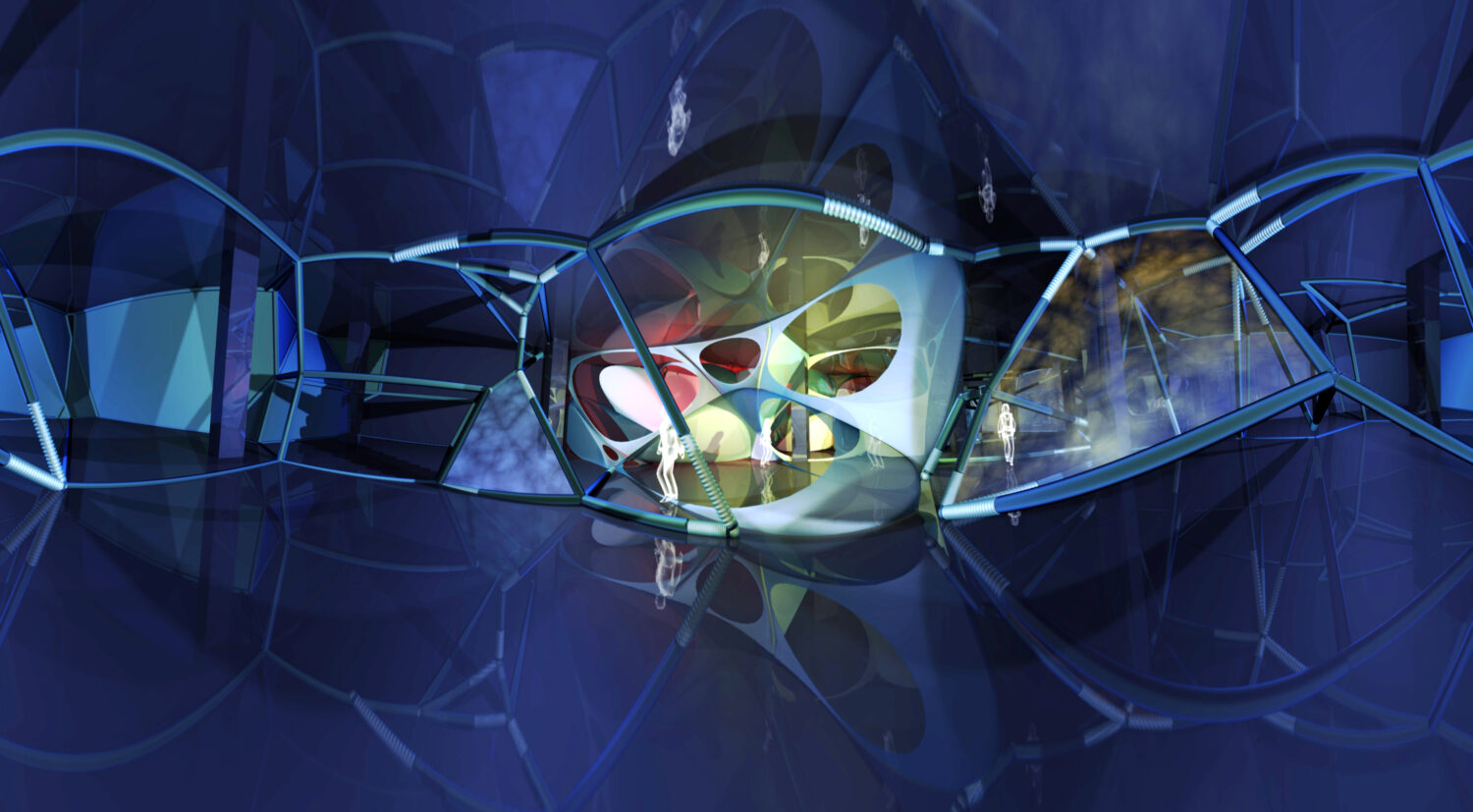
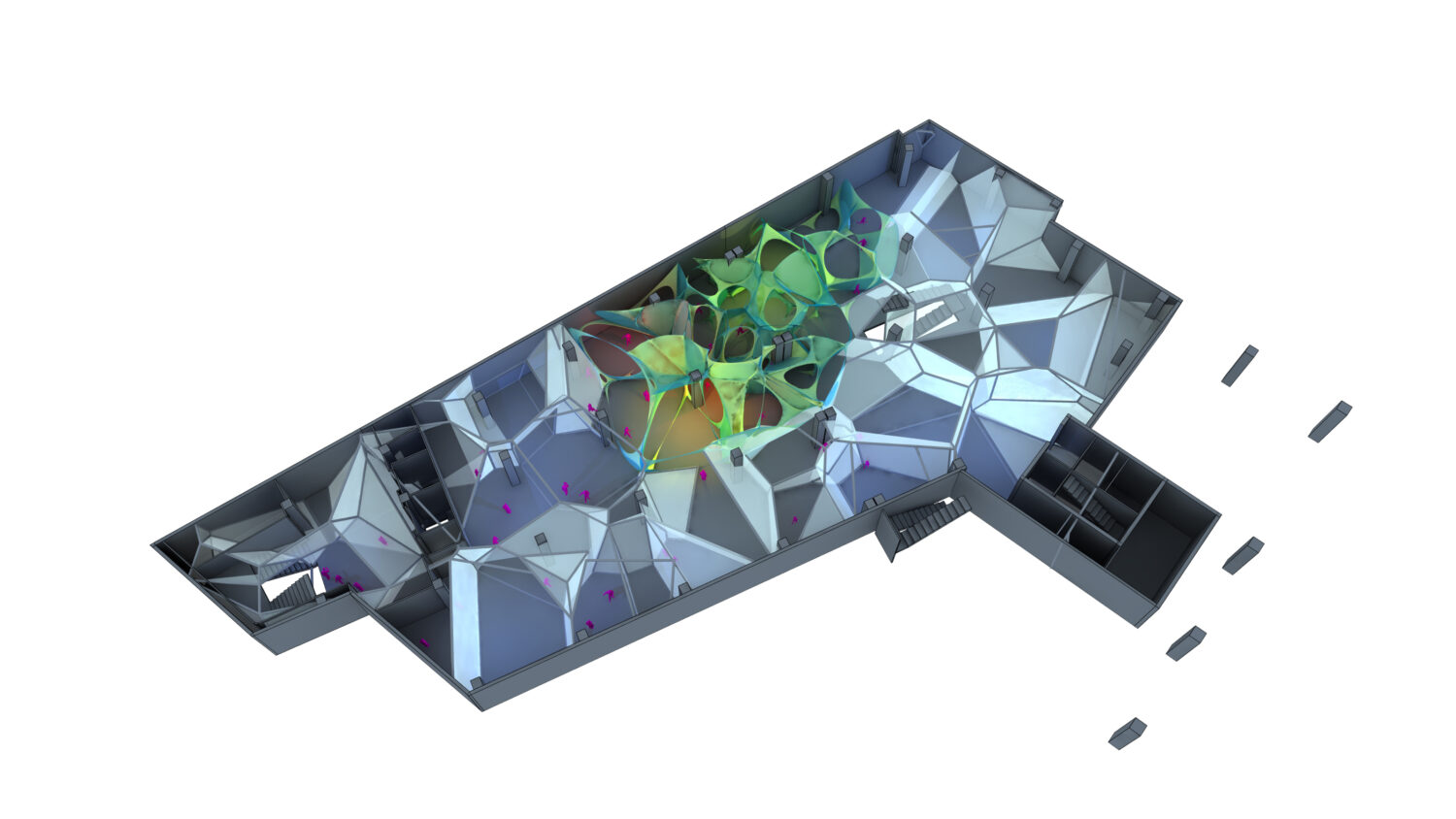
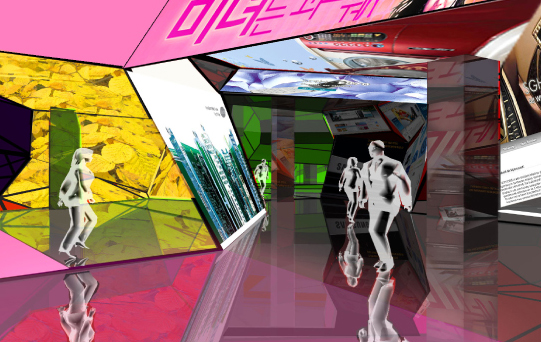
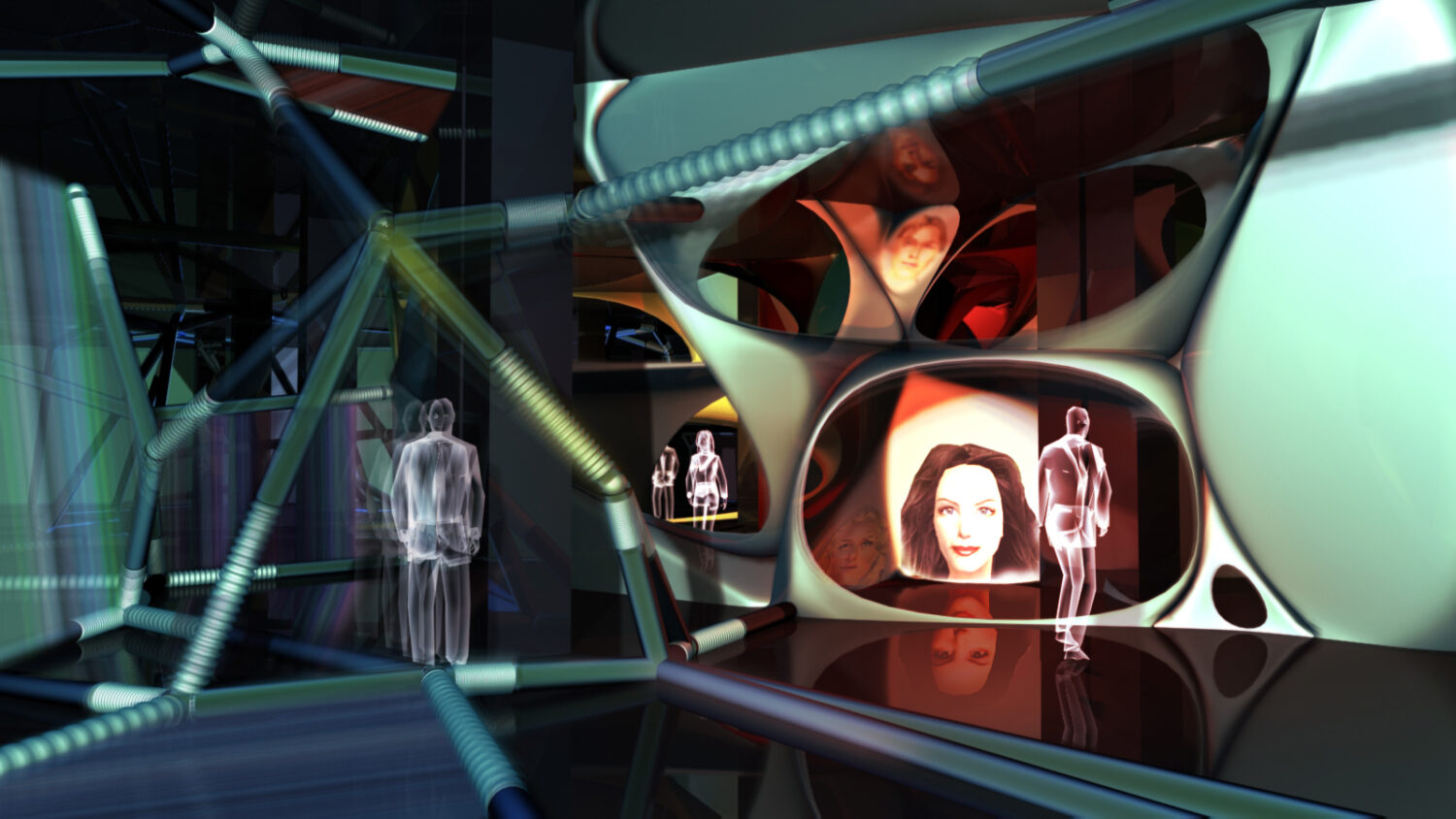
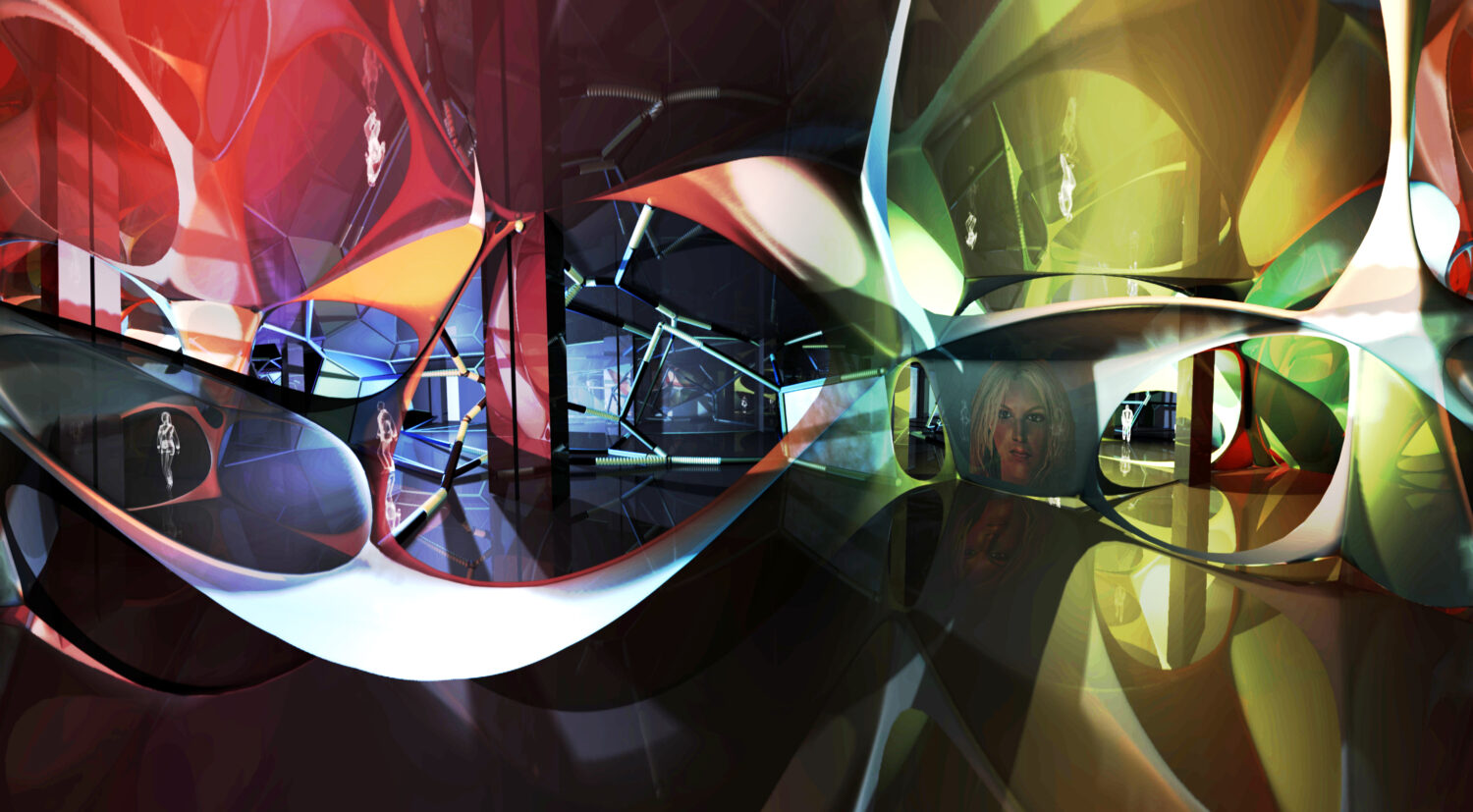
The Digital Pavilion is a complex adaptive robotic system of interacting installations. Navigating the interior feels like walking in the interior of a living installation. You are inside technology: ubiquitous computing at its full potential. Installations interact with the public, but also with other installations. The output of one installation provides relevant data which are used as inputs for other installations. The visitors are individually identified [using RFID tracking] and they build up their unique profiles while navigating through the floors of the pavilion with the interactive and interacting installations. Each visit will be an unique experience, the installation would never repeat its exact shape and content, always being adjusted in real-time by the movements of the public and by the streaming content [using WiBro/WiMax technology]. The public interacts with the installations using a special 4G/WiBro handheld device. Thus the building as a living installation becomes a showcase for the technological priorities as set by the Korean government. The mix of real-life, augmented reality and online experience described below results in the most ambitious and groundbreaking project of its kind. This is a great opportunity for the South-Korean high-tech industry to showcase its global significance. The scenarios described above are extrapolated from current state-of-the-art technology. A lot may sound like science-fiction but everything is perfectly achievable with current technology. The applications will be developed in close collaboration with South-Korean companies. This is an opportunity for these companies to profile themselves in such an extraordinary project and a potential source of private sponsorship for the project.
Voronoi Cell Structure
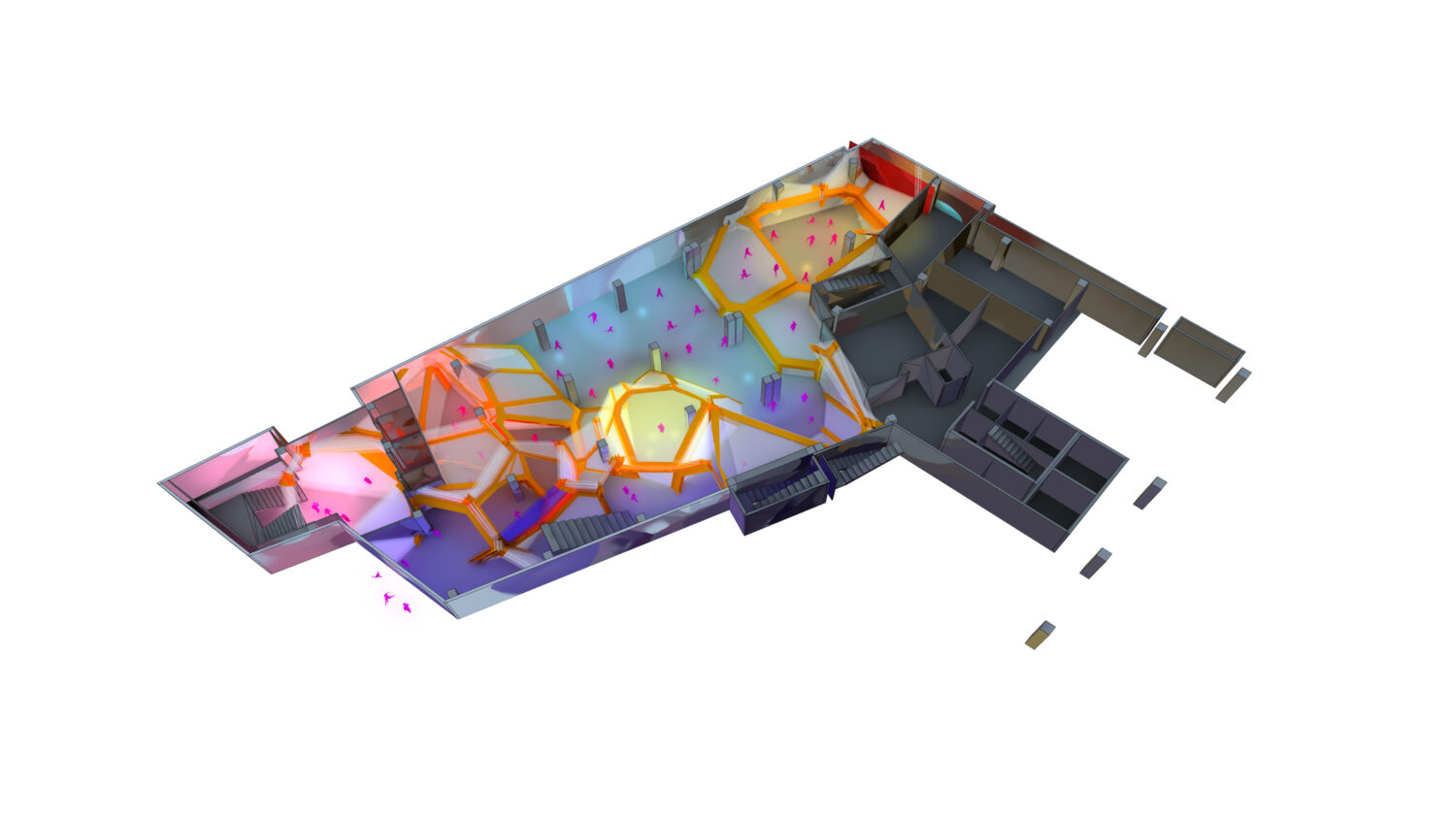
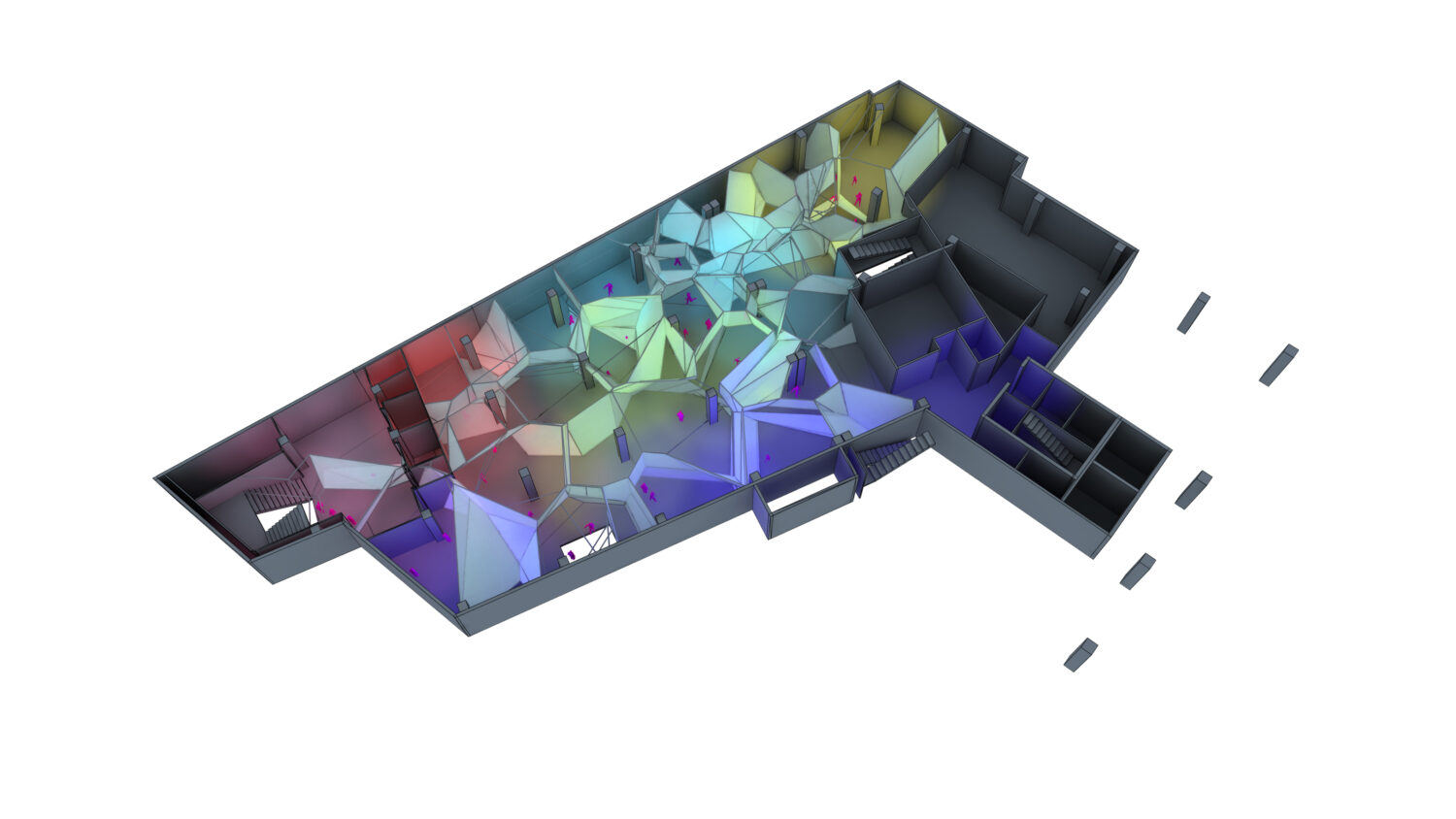
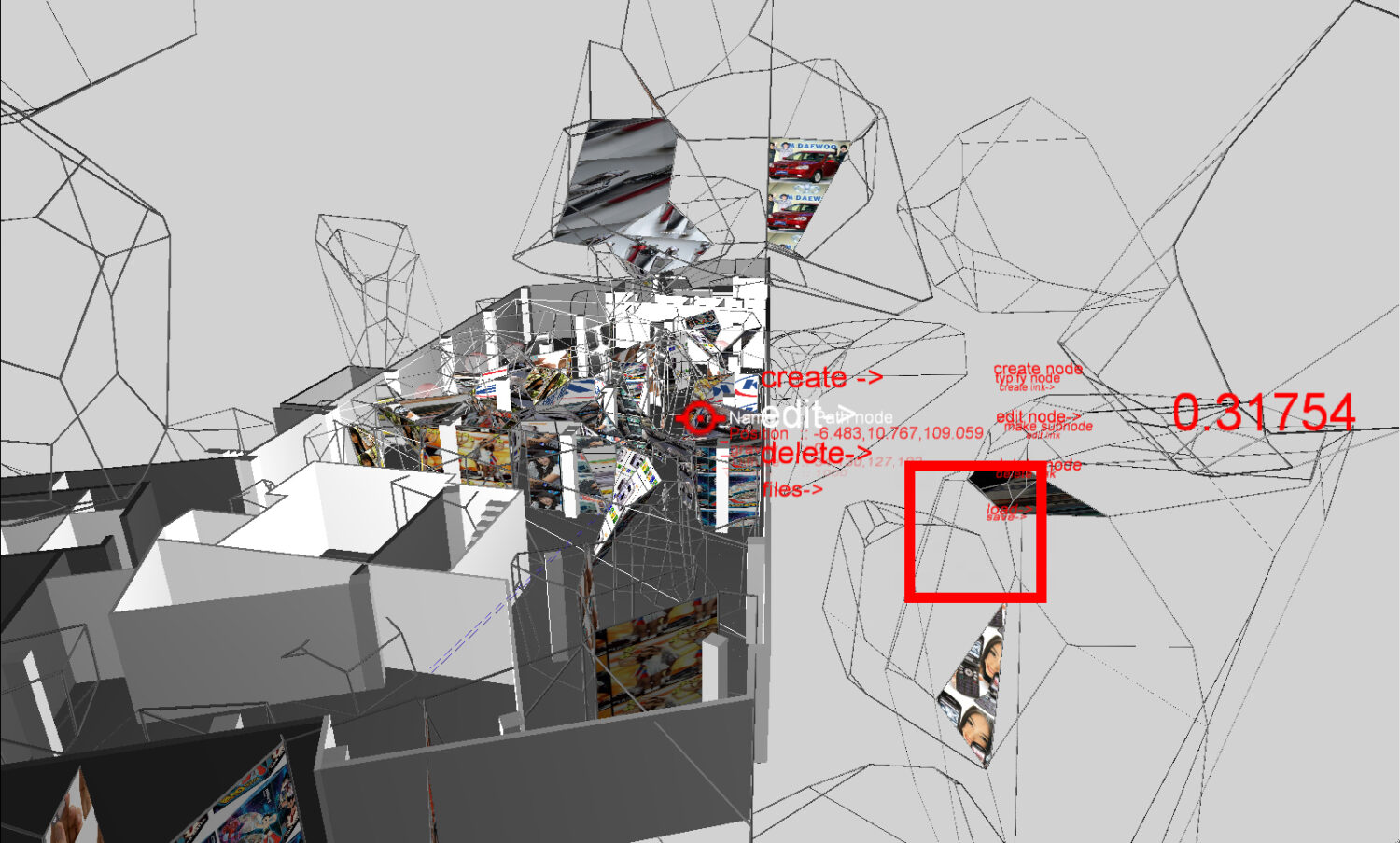
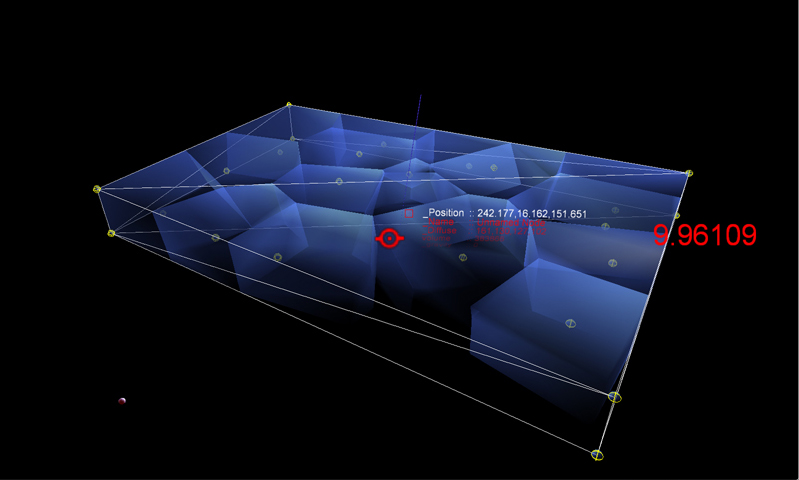
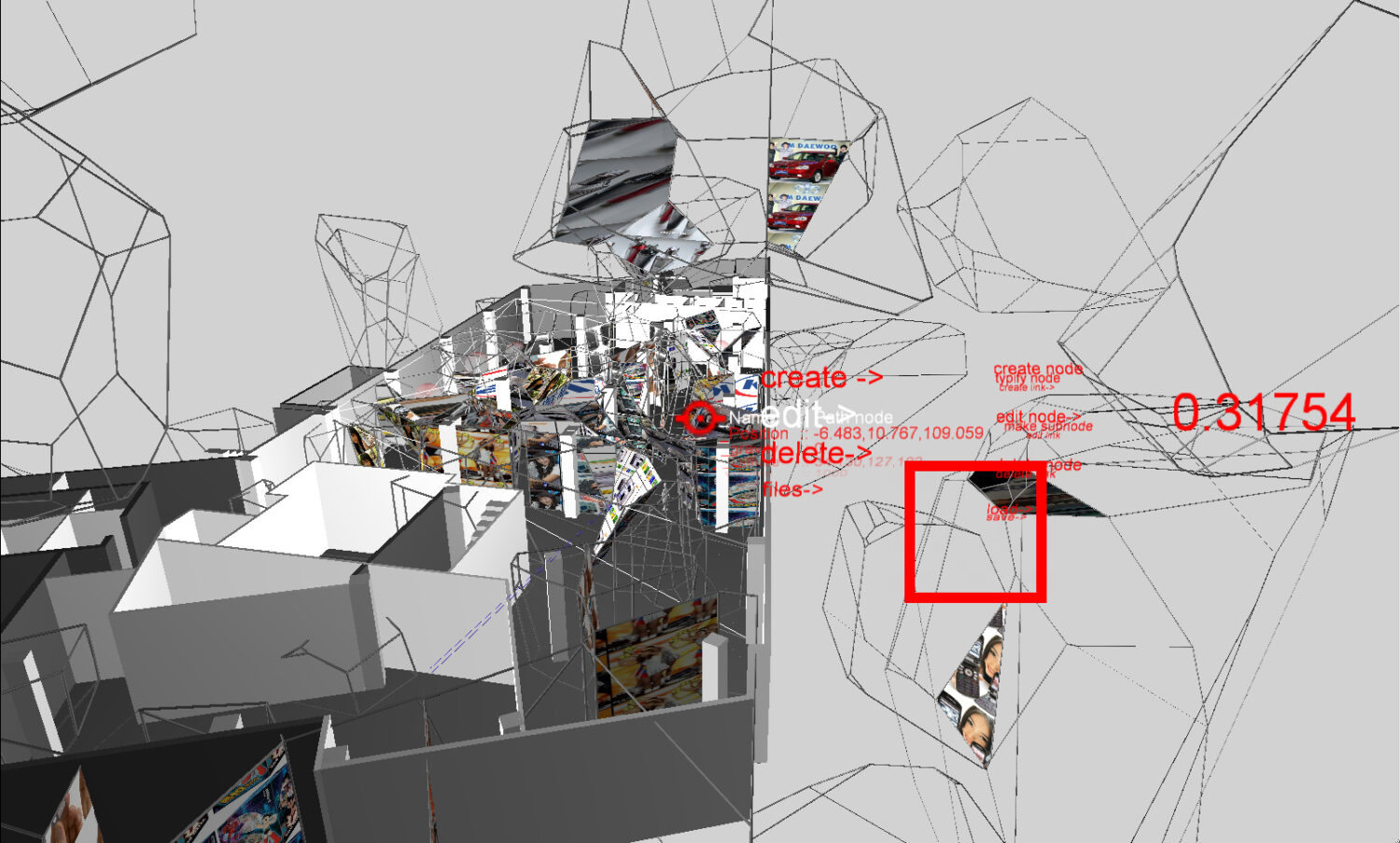
The spatial division of the pavilion interior is derived from a 3d Voronoi diagram algorithm. The definition of the Voronoi diagram is: ‘the partitioning of a plane with n points into convex polygons such that each polygon contains exactly one generating point and every point in a given polygon is closer to its generating point than to any other’. The 3d Voronoi principle is translated in our design into the effective cell-like 3d spatial division. The basic Voronoi cell structure is endless. This endless structure is intersected with the Digital Pavilion volume and the result is materialized as the interior spatial structure. This is a parametric system. By varying the density and position of the Voronoi generating points variations of the resulting spatial division are achieved. The cell structure can be materialized in several ways depending on the situation. The sides can be constructed by structural beams and faces/planes can become walls, floors or ceilings. Faces can also be opened to provide, for example, passage form one cell to the other. All surfaces of the existing concrete structure will be covered with darkened glass. The result is a soft reflective effect enhancing the feeling of endless space in the physical experience. The glass will be back-lit by LED-arrays. The reflective surfaces can thus be activated to create atmospheric lighting effects or display readable information. This greatly enriches the interactive experience of the environment.
Handheld 4G/WiBro device
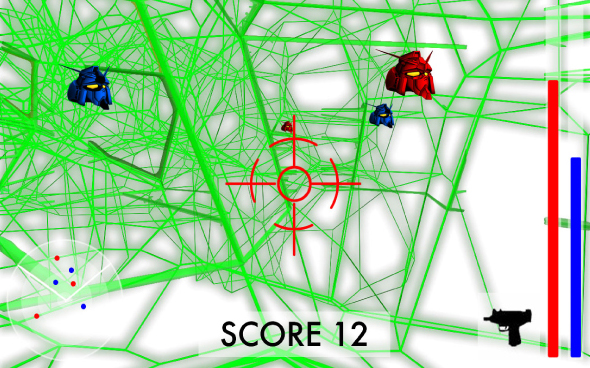
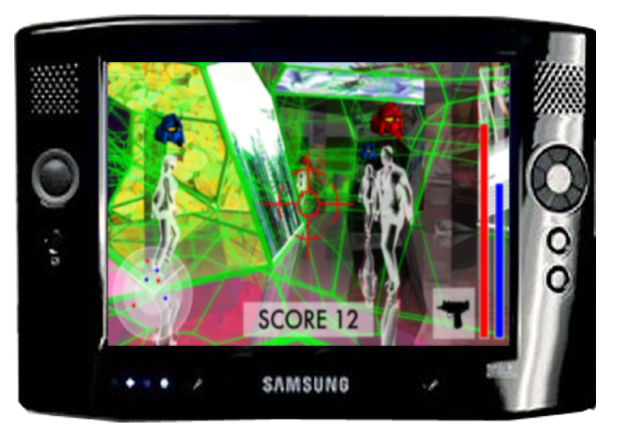
In the Digital Pavilion physical and virtual reality are mixed. The physical environment has a virtual, digital extension superimposed to it. This is the virtual play and interaction component. The mixture of physical and virtual reality is called ‘augmented reality’. Each visitor is given a handheld interactive media device. This device, with similarities to DMB handhelds and PDA’s, is the visitor’s viewport to the virtual world, literally and figuratively. Literally because the device, with its camera lens on the back, acts like a viewer by revealing the virtual world from the viewer’s perspective. Figuratively because it serves as a communication device revealing information about the location (in the cell structure) of the user, the products displayed, the state of the experience game, etc. The handheld is not just a very advanced augmented reality gaming device. It also is an essential tool in the discovery of the products and technologies displayed in the pavilion by the Korean authorities and exhibitors. Its functions include:
Dynamic map: the handheld displays the position of the visitor in real-time. The visitor can browse through the list of exhibitors and/or products, select them and the map will guide the visitor to the chosen destination. Visitors are localized by an RFID-tag embedded in the handheld. RFID-receivers cover the entire pavilion area.
Streaming product info: the same RFID localisation technology informs the handheld about which space/cell/stand is being visited by the visitor. Contextual data (text/image/audio/video) is streamed to the handheld to give extra information about the products and technologies shown. The system makes use of WiBro/WiMax broadband wireless network technology for real-time streaming of high resolution media content.
Log: the handheld records the whole trip of the visitor. Every location, stand and investigated product is recorded for retrieval at home. The visitors can tag specific exhibitors or products which have caught their special attention. The whole log is put online on the visitor’s personalized Digital Pavilion webpage.