director ONL | emeritus professor Hyperbody TU Delft [2000-2016] | professor Qatar University [2017-2019] | consultant Qatar Robotic Printing Qatar University [2019-2022] | visiting professor INDA Chulalongkorn University Bangkok [2023-2024] | email oosterhuis@oosterhuis.nl
1998 | Space Station | Programmable Skin
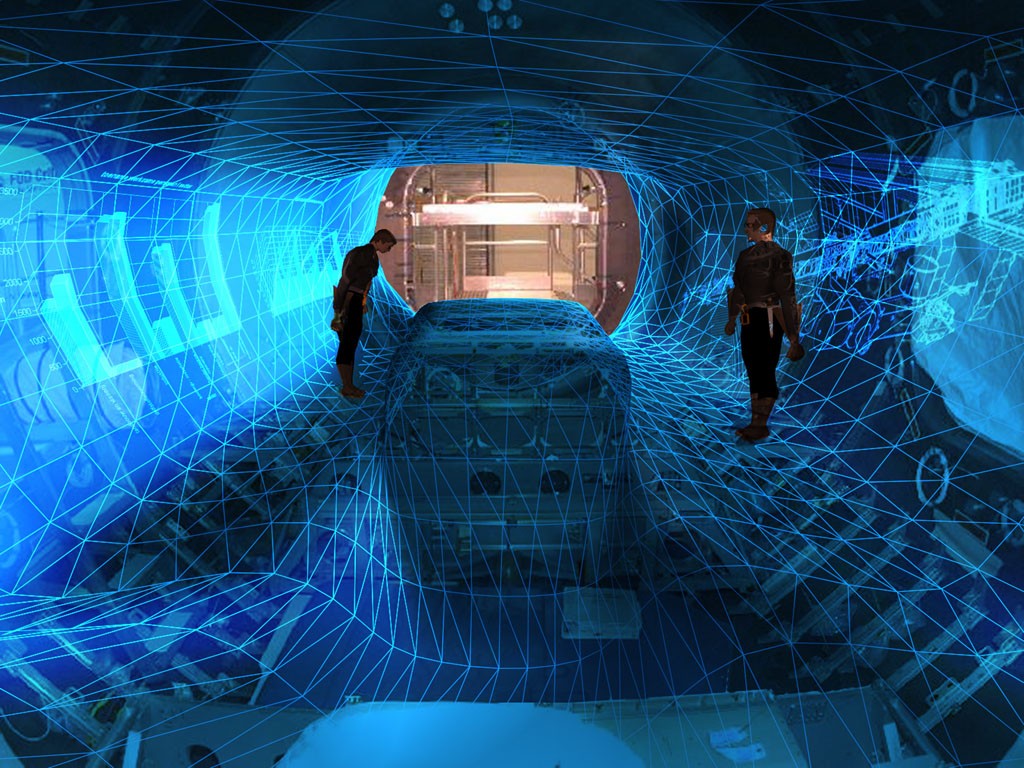
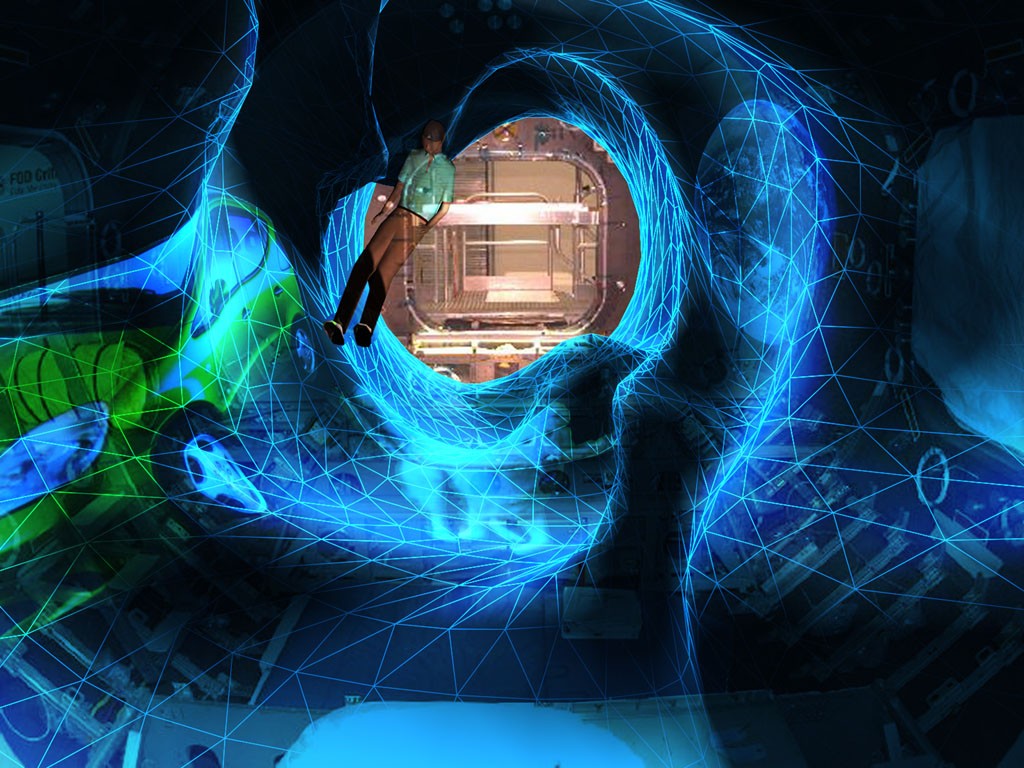
Space Station | meeting mode
Active inner skin

For our thought exercise the outside shape and destined functioning of the Space Station Module are assumed to be existing and final. This study concentrates exclusively on the interior skin. The concept for the active interior skin looks at first sight futuristic and not yet realisable. The contrary us true. All techniques needed to realise the active skin are basically known. They only need to be adjusted and targeted to this specific configuration and synthesis of different engineering techniques.

It is imaginable and thus realisable to regard the interior skin as a flexible membrane which shape can actively be adjusted by the astronauts. Here is how it works. In between inner and outer skin a high resolution space frame is inserted of which all individual members are pneumatic bars. Each of these cylindrical bars can become longer or shorter. Each change is calculated in real time by a computer programme. The programme resets the lengths of all members of the space frame within seconds. The calculation program sends fresh data to the pneumatic cylinders and orders them to adjust their lengths. The active data-driven structure works like a bundle of muscles. The muscle contracts and relaxes after coordinated instructions of the brain.

The interior skin is immersed with innumerable led and lcd panels. The separate panels work together to form a large overall image or text. The astronauts can build a text-environments or an image-cave according to their momentarily needs. This could be a working environment where a group of people works on a 3d model, or where they analyse data from scientific experiments. The facts and figures are projected coordinately through the lcd panels immersed in the flexible skin.

These images merged into the interior skin could also represent a free time environment. In the meantime the skin moulds into the counter shape of the desired activity. Real time images of the family at home, comforting images of familiar nature, or projections from webcams displaying panoramic views as seen from the Space Station. Through these virtual windows the space travellers would be able to experience the feeling of floating in deep space.

A new concept for interior skin must be developed in order to suit the changing needs of such an interactive working or free time environment. A sort of 3d rubber skin with internal springforce to effectively follow the contractions and expansions of the flexible skin.

In essence this concept for the active and adaptive skin offers the astronaut a full communicative environment. Communication with the professionals of the scientific staff of the command center on earth, or social communications with his own private environment at home. The skin adapts to host any type of contact that is needed or allowed, the skin enfolds the wishes of the user.

Kas Oosterhuis, October 1998
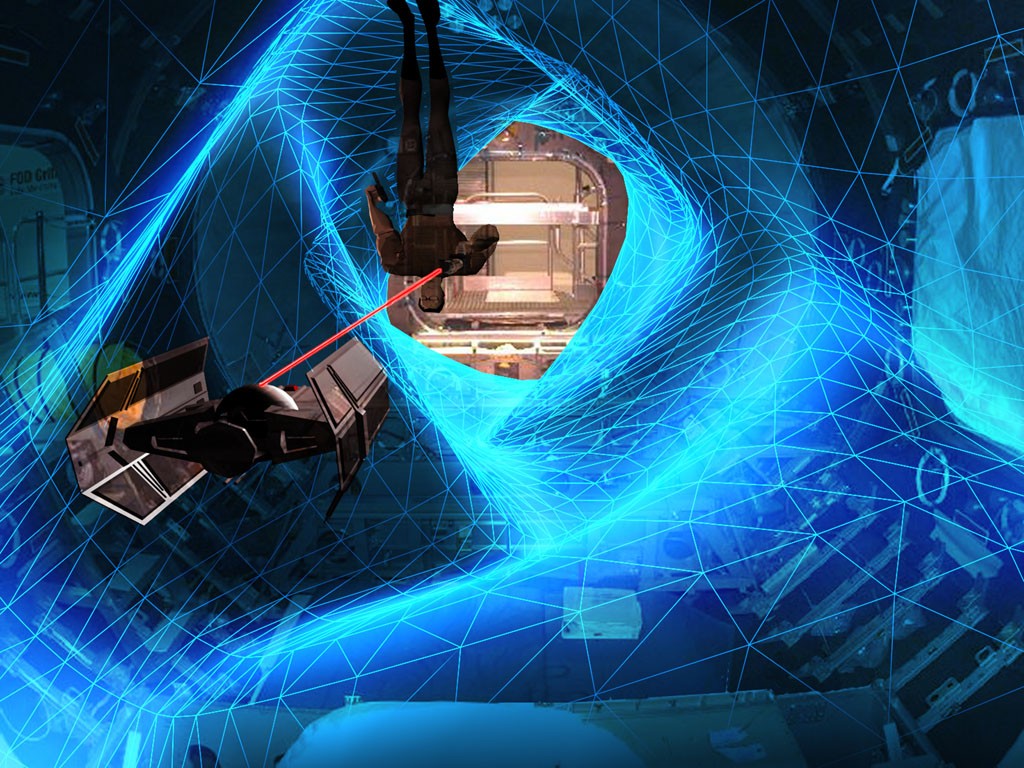
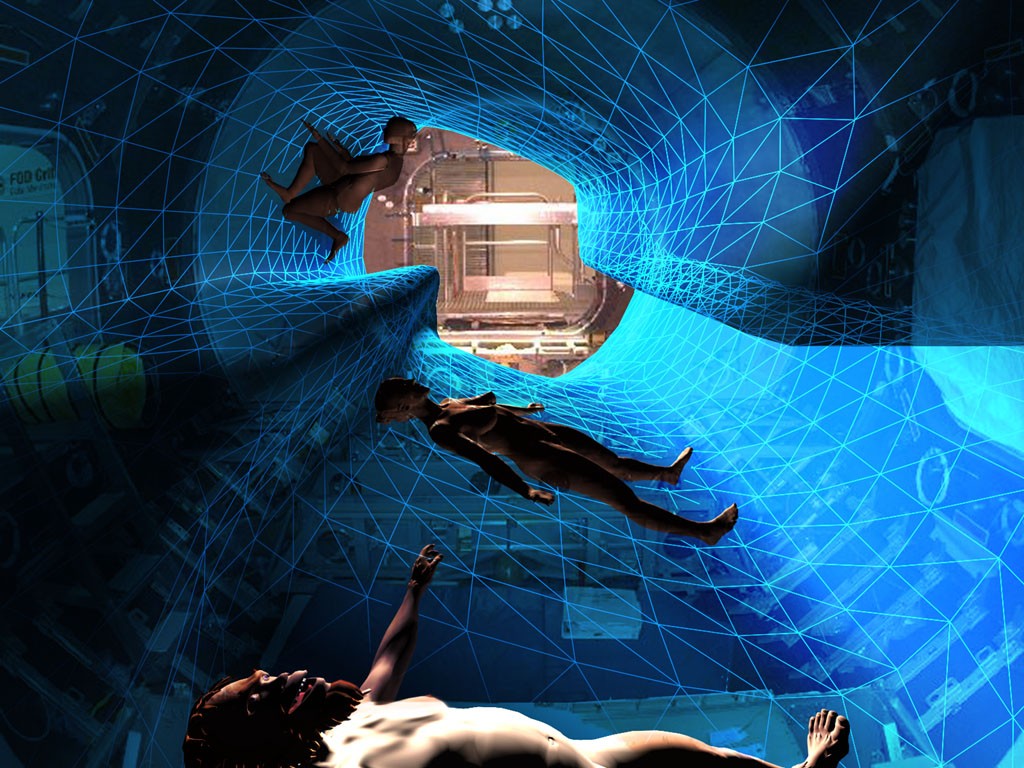
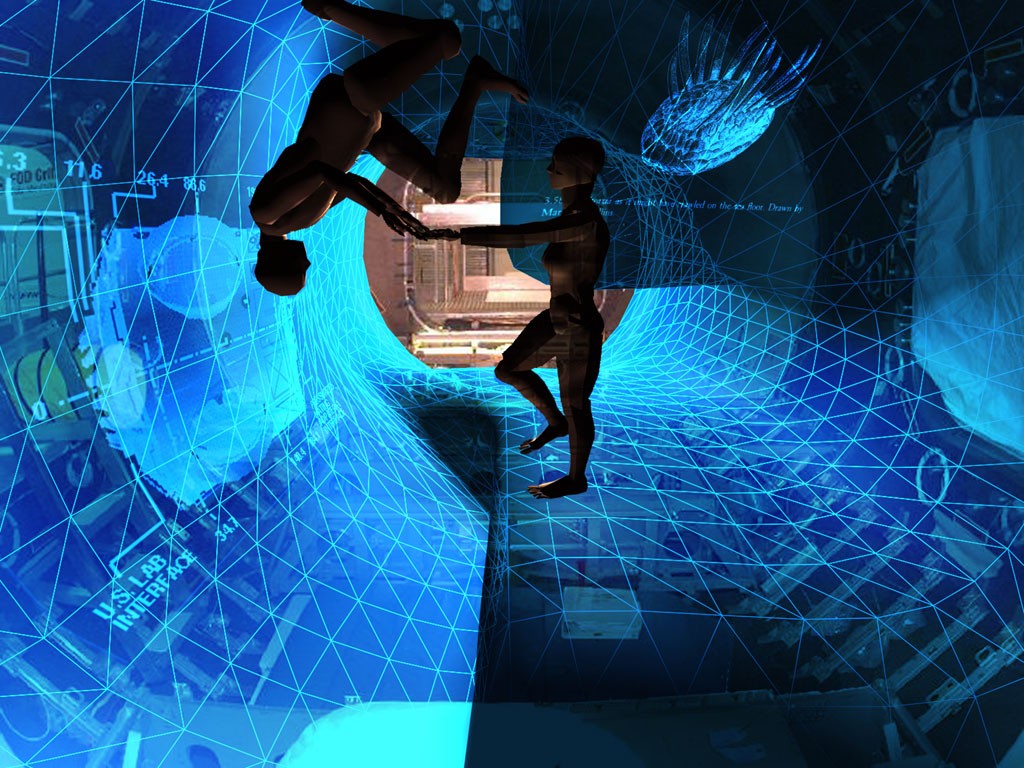
Space Station | game modeSpace Station | sleep modeSpace Station | private modeSpace Station | home mode